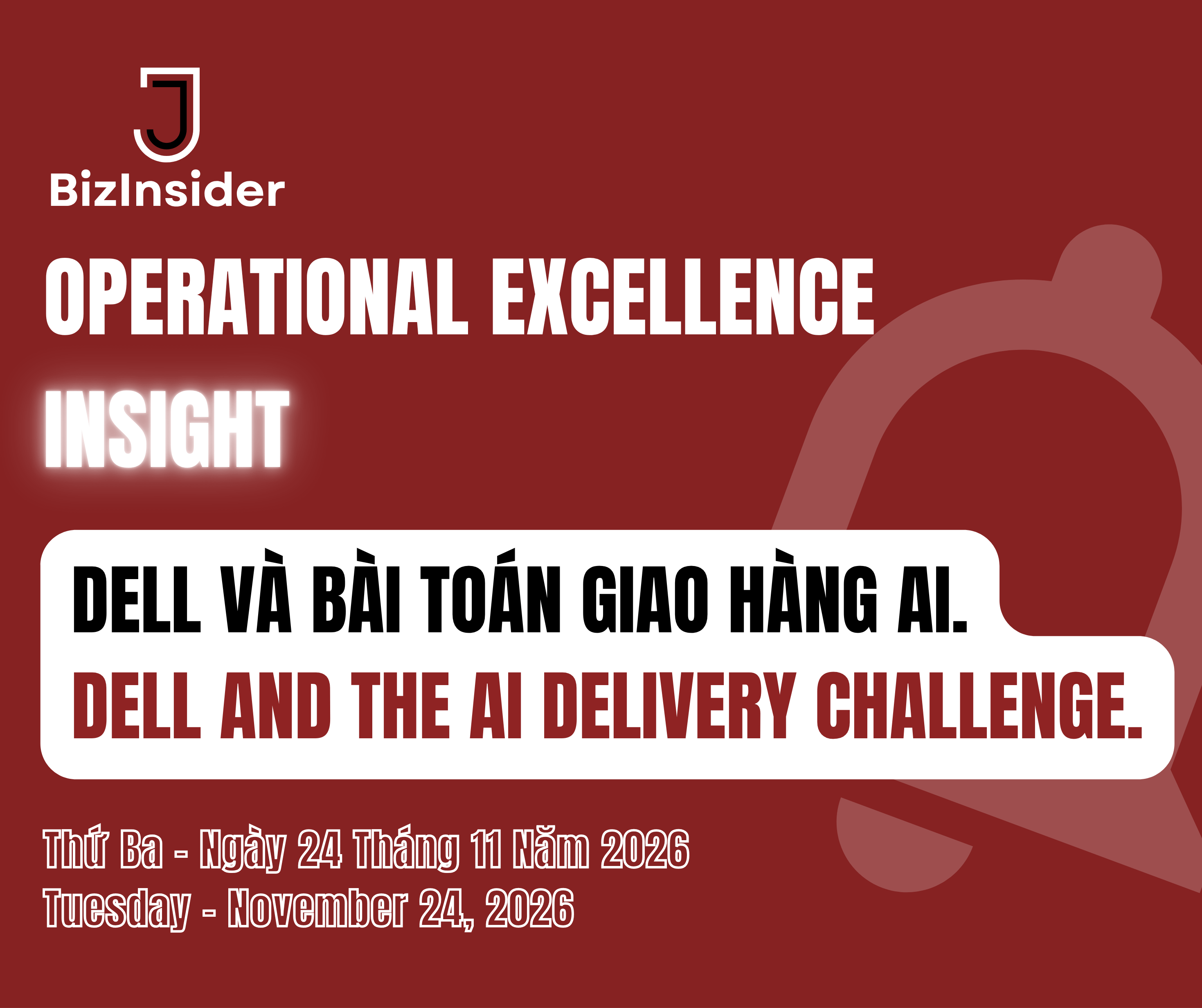
Operational Excellence (OPEX) Insight – Tuesday - November 24, 2026: Dell and the AI Delivery Challenge
Dell and the AI Delivery Challenge

 WELCOME TO THE NEW BIZINSIDER - YOUR NEW HOME FOR KNOWLEDGE, AI & PROFESSIONAL GROWTH!
BizInsider has officially moved to its upgraded home at https://bizinsider.co/, bringing you more than just articles! Enjoy bilingual insights, Ask AI, podcasts, KnowLay courses, Career Insights, exclusive webinars, and expanded membership benefits. Already a member? Simply use your existing registered email to access the new platform, maintain your membership, or upgrade to unlock even greater value. Don’t miss our exclusive 20% welcome offer for existing members!
 Make the move today: https://bizinsider.co/
In late November 2026, two large US technology hardware makers entered their earnings season, and the market treated this as a test of demand for artificial intelligence servers. HPE reported quarterly results after the close on November 23, while Dell reported on November 24. What drew observers’ attention was not only the revenue figure, but a number rarely discussed in other industries, namely the order backlog.
According to prior disclosures, as of the end of the second quarter of its fiscal year, Dell had a record artificial intelligence order backlog of about 95 billion dollars. In that quarter, the company recorded about 60.9 billion dollars in new artificial intelligence orders and about 16.4 billion dollars in revenue from that segment, double the same period a year earlier. The company raised its full year revenue outlook by 25 billion dollars, to 192 billion dollars, and raised its artificial intelligence server revenue outlook to 74 billion dollars. On the HPE side, the company had earlier reported quarterly revenue up 34 percent to a record of about 12.2 billion dollars, with server revenue up more than 35 percent, and its head described artificial intelligence as becoming a multi year growth driver.
An order backlog of 95 billion dollars sounds at first like wonderful news. It shows enormous demand, a long line of customers waiting to be served. But for the person working in operations, a number like this is not only good news, it is also a problem. An order backlog creates value only when it is delivered, and the gap between taking an order and delivering it is exactly where everything can go wrong. A large backlog is both evidence of success and a promise that must be kept, and it is keeping that promise that is the real test.
This is why the earnings reports of Dell and HPE are seen as a test. The important question is not whether demand is large, because that is clear from the backlog figure. The question is whether capacity keeps up with demand, whether the backlog is being converted into revenue fast enough, and whether the orders already signed truly turn into deliveredgoods and collected money. These are all operational questions, and they apply to any business that has more orders than it can deliver right away.
This article will use one operational tool to read Dell‘s situation and draw lessons for every type of business. That tool is order backlog and capacity management, a way of looking at the relationship between three things, namely the demand coming in, the volume of orders waiting, and the capacity to deliver. This tool fits especially well with the situation of a business that has more orders than it can meet right away, a situation that sounds enviable but harbors many operational risks if not well managed.
Plus
This post is for members
Subscribe to read the full post and more in-depth analysis from BizInsider.
Case Study
More from this section
 Pro
A Selloff Sweeps Away AI Stocks.
 Plus
Operational Excellence (OPEX) Insight – Thursday - November 19, 2026: Anthropic's First Day on Nasdaq
 Plus
Operational Excellence (OPEX) Insight – Tuesday - November 17, 2026: Klarna Accelerates on Its AI Assistant
 Pro
Nvidia Loses Its Captain.
 Plus
Operational Excellence (OPEX) Insight – Thursday - November 12, 2026: SoftBank Dumps All Its Nvidia, Doubles Down on OpenAI
 Plus
Operational Excellence (OPEX) Insight – Tuesday - November 10, 2026: Nvidia Slides 4%, Dragging Nasdaq Down
 Pro
Operational Trends | #07: Handing Operations Over to AI.
 Plus