Operational Trends | #07: Handing Operations Over to AI.

Welcome to the unique weekend article for the Loyal Fan subscribers-only edition.
A Series Of Articles On Operational Trends.
 WELCOME TO THE NEW BIZINSIDER - YOUR NEW HOME FOR KNOWLEDGE, AI & PROFESSIONAL GROWTH!
BizInsider has officially moved to its upgraded home at https://bizinsider.co/, bringing you more than just articles! Enjoy bilingual insights, Ask AI, podcasts, KnowLay courses, Career Insights, exclusive webinars, and expanded membership benefits. Already a member? Simply use your existing registered email to access the new platform, maintain your membership, or upgrade to unlock even greater value. Don’t miss our exclusive 20% welcome offer for existing members!
 Make the move today: https://bizinsider.co/
CHÀO MỪNG ĐẾN NGÔI NHÀ MỚI BIZINSIDER - NHIỀU GIÁ TRỊ HƠN, NHIỀU ĐẶC QUYỀN HƠN!
BizInsider đã chính thức nâng cấp ngôi nhà mới tại https://bizinsider.co/, không chỉ có bài viết mà còn tích hợp tạp chí song ngữ, Ask AI, Podcast, khóa học KnowLay, Career Insights, webinar độc quyền và nhiều quyền lợi hội viên hấp dẫn. Đã là hội viên? Chỉ cần sử dụng email đăng ký cũ để truy cập nền tảng mới, tiếp tục duy trì hoặc nâng cấp gói hội viên để nhận thêm nhiều giá trị. Đặc biệt, hội viên cũ được ưu đãi 20% trong chương trình chào mừng ngôi nhà mới!
Chuyển sang ngôi nhà mới ngay hôm nay: https://bizinsider.co/
Over the past few months, a new phrase has crept into nearly every corporate technology meeting: agentic AI. Unlike the earlier generation of AI that only answered questions and drafted text, this new generation is delegated the authority to act on its own, to reorder stock, to reroute deliveries, to schedule, to answer and close a customer request, all within a granted scope. The promise sounds loud. But the real numbers tell a far more sober story, and it is precisely the gap between the promise and the real numbers where an operations person needs to stand to see clearly.
Set a few real numbers side by side. A report from a research group at MIT released in mid 2025 found that about 95 percent of corporate generative AI pilot projects produced no measurable business impact, meaning nearly all the money poured in did not come back as visible results. The consultancy Gartner, in June 2025, forecast that more than 40 percent of agentic AI projects would be cancelled before the end of 2027, for three reasons that recur almost word for word: escalating cost, unclear business value, and inadequate risk control. Gartner also estimated that among the thousands of vendors calling themselves agentic AI, only about 130 names are real, the rest being a phenomenon it names bluntly as agent washing, that is, taking virtual assistants, old process automation software, or earlier chatbots and dressing them in a fashionable name.
Yet on the opposite side, deployment keeps accelerating. In a corporate survey early in 2026, nearly all respondents said they would expand their use of agentic AI during the year, while another survey recorded 94 percent worried about agent sprawl, that is, each department raising a few agents of its own with no one holding the whole picture. The software company Salesforce, in a mid September 2026 announcement about its Agentforce platform, said it had done thousands of agent deployments over two years and recorded seven billion units of work performed by agents, with a single quarter accounting for 3.2 billion. These figures are company reported and not independently verified, but the scale they suggest is hard to ignore.
So the real picture is neither a straight line up nor a dismissal. It is a paradox: money and enthusiasm pour in very fast, while most projects yield no value, a sizable share will be cancelled, and at the same time there are places that reap real results. When a tool is this powerful yet fails this often, the good question is not whether to use it, but why it succeeds here and fails there, and where the difference lies.
The answer of this piece runs against how the technology market is discussing it. The market debates which model is smarter, which platform has more features, which agent is more autonomous. But seen from the operations seat, the essence of agentic AI is not a technology problem, but a problem so old that every manager has wrestled with it: the problem of delegation. Delegating to a machine that makes its own decisions and acts is, at its core, identical to delegating to a new employee allowed to act without checking back. And the craft of operations management has seventy years of honing exactly three tools for delegating safely.
No one hands the safe keys and the company credit card to a newcomer on the first day. A good manager does three things first. First, write out clearly how the work is done, step by step, what counts as the result achieved, and which cases require stopping to ask. Second, plant warning lines in advance, the signs that oblige an employee to halt and call someone with authority rather than risk it alone. Third, set limits on the very authority granted, so that even if the other person errs, that error is not strong enough to bring down the whole business. Those three things, in the language of lean operations management, have proper names: Standard Work, Jidoka, and Poka-yoke. These are the three tools this piece uses to examine the trend of delegating to machines, and the welcome part is that all three are old, cheap, and applicable to every type of business, from a software corporation to a noodle shop, a freelancer, or a small clinic.
Pro
This post is for members
Subscribe to read the full post and more in-depth analysis from BizInsider.
Case Study
More from this section
 Plus
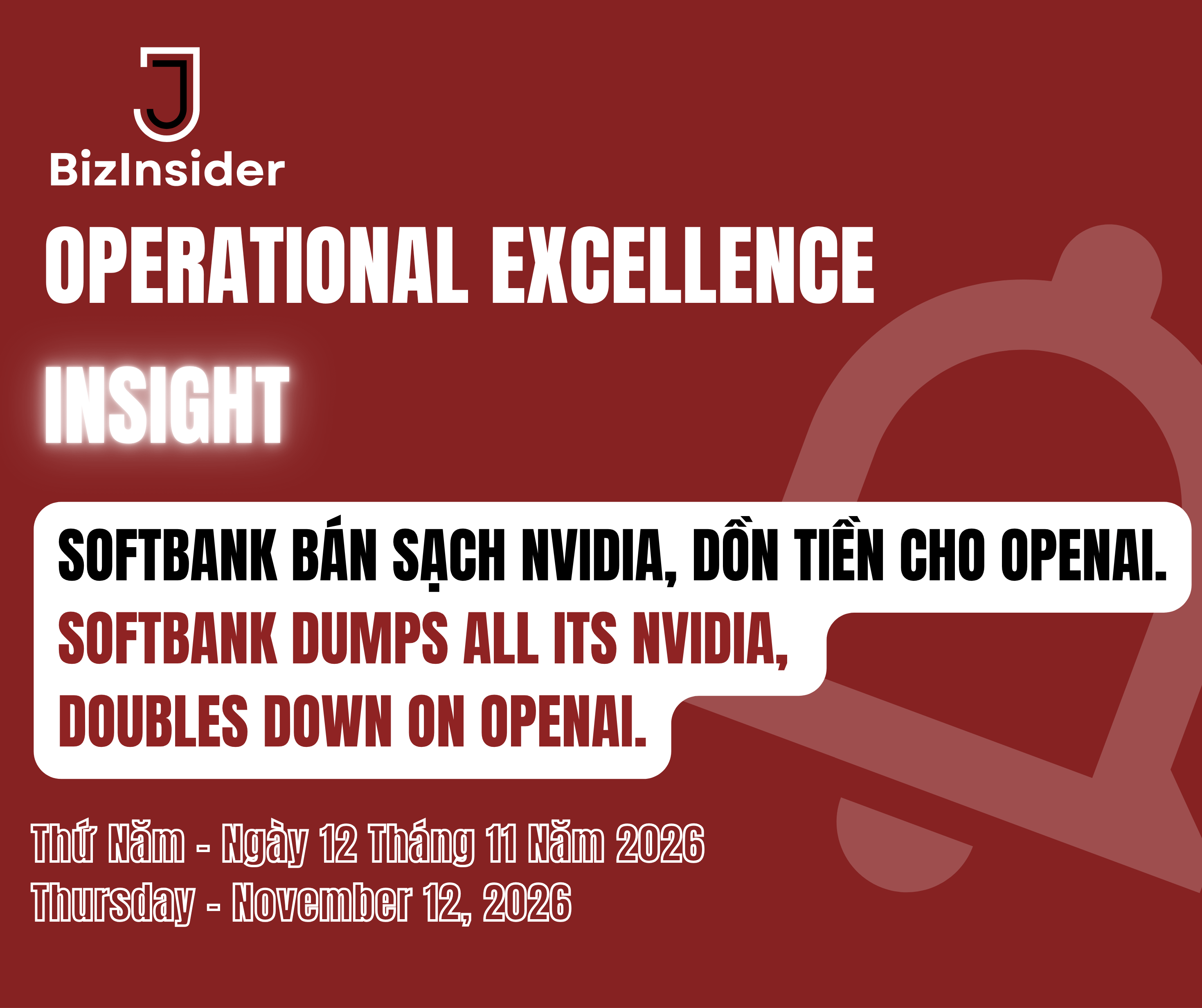
Operational Excellence (OPEX) Insight – Thursday - November 12, 2026: SoftBank Dumps All Its Nvidia, Doubles Down on OpenAI
 Plus
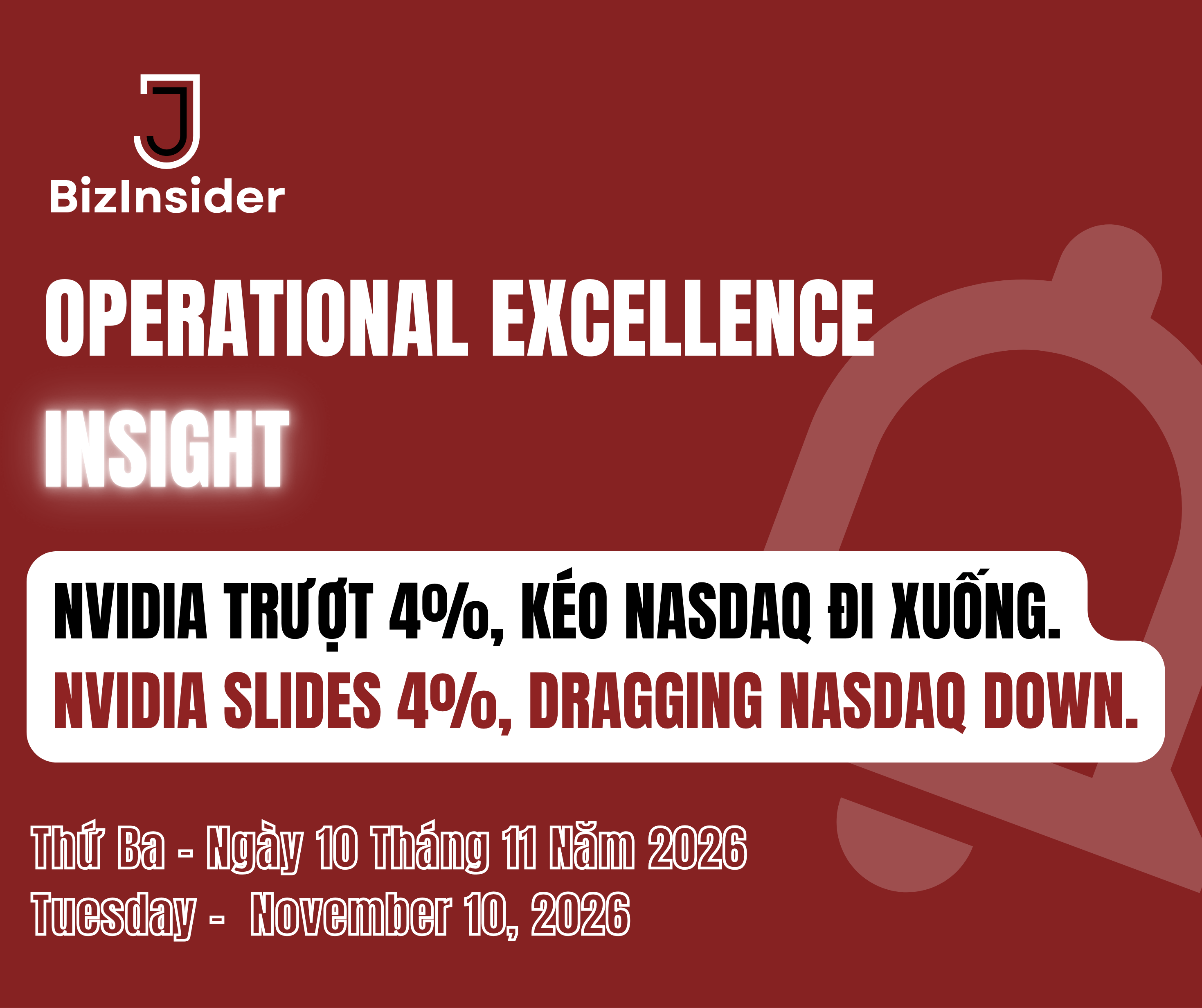
Operational Excellence (OPEX) Insight – Tuesday - November 10, 2026: Nvidia Slides 4%, Dragging Nasdaq Down
 Plus
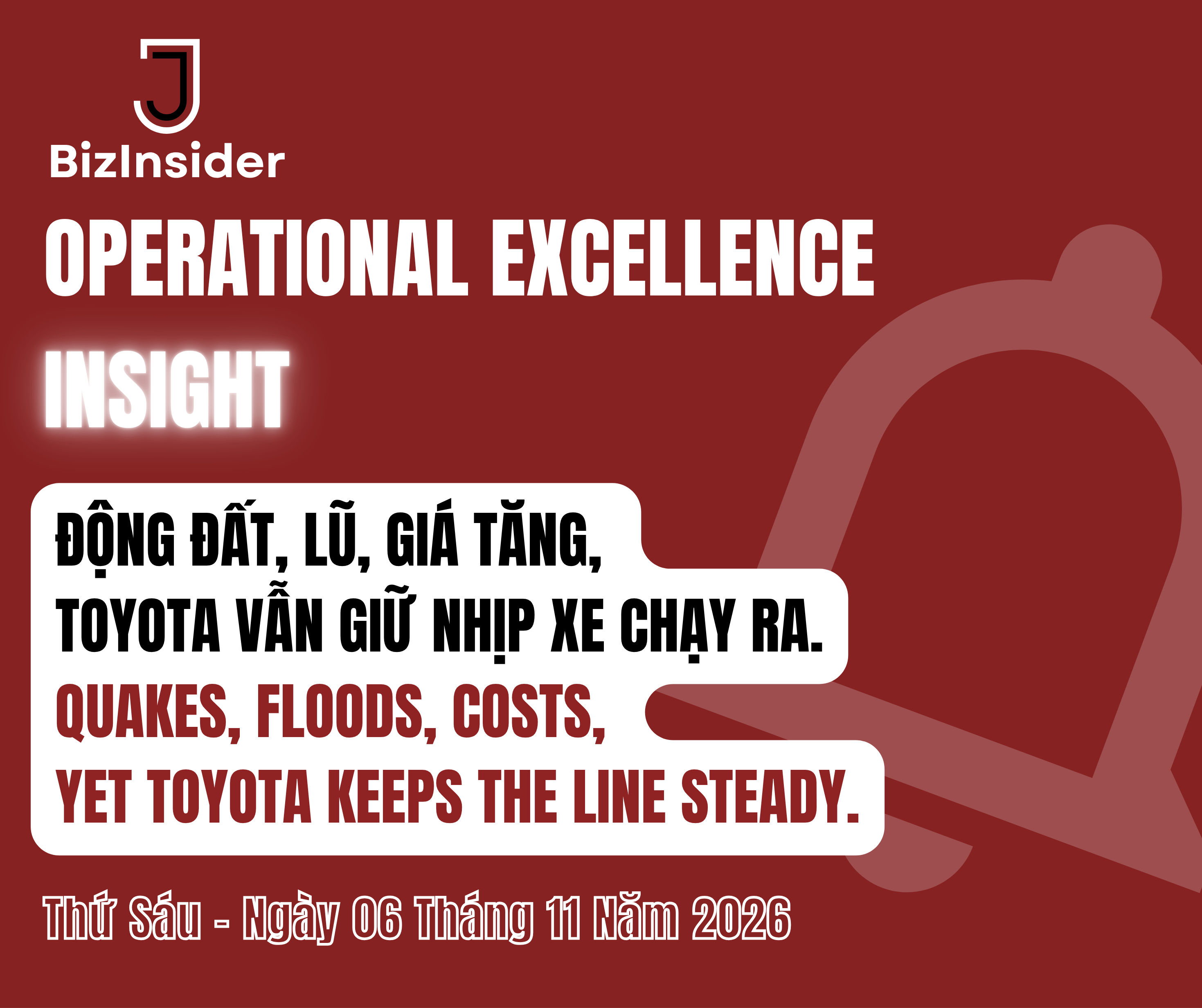
Operational Excellence (OPEX) Insight – Friday - November 06, 2026: Quakes, Floods, Costs, yet Toyota Keeps the Line Steady
 Plus
Operational Excellence (OPEX) Insight – Tuesday - November 03, 2026: Looks Like a Jump, but Not Really Selling More
 Pro
Operational Trends | #06: AI's Bottleneck Has Moved From Chips to Power.
 Plus
Operational Excellence (OPEX) Insight – Thursday - October 29, 2026: Prices Up, Volume Down, Margins Still Fatter
 Plus
Operational Excellence (OPEX) Insight – Tuesday - October 27, 2026: Profit on Paper, Cash in Reality
 Pro